
Adapting to Dry Times: Cheam First Nation Builds Drought Resilience at Hope Slough


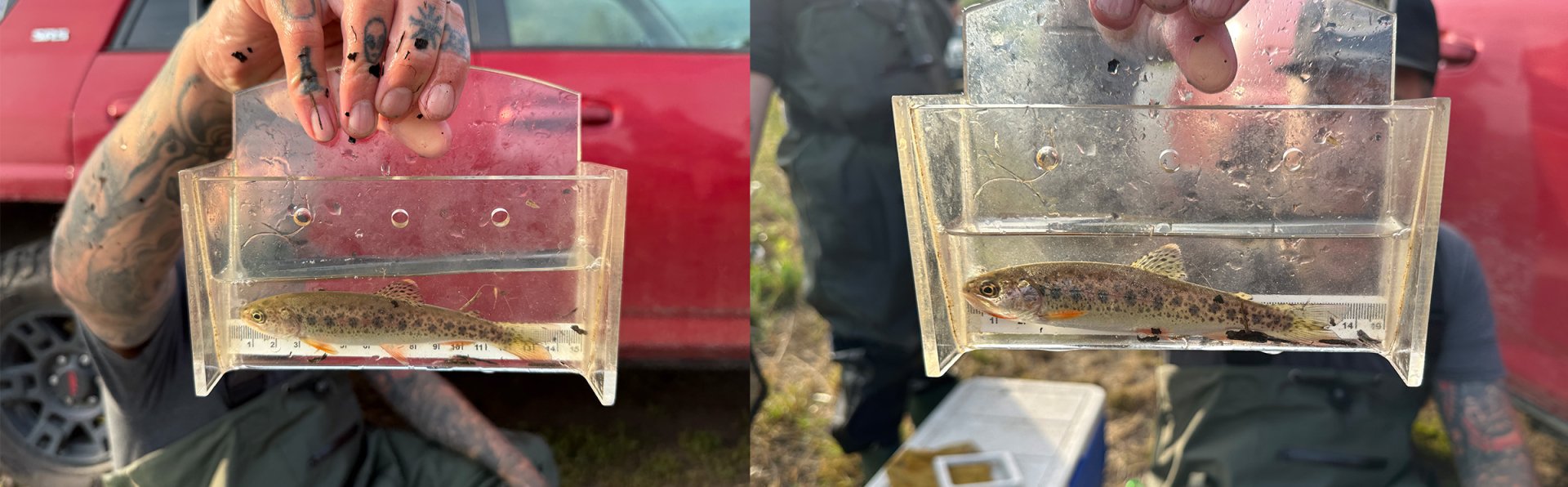
Juvenile Coho captured and assessed during field monitoring. (Photo Credit: Cheam First Nation)
In recent years, the Hope Slough watershed has experienced increasing drought conditions, declining water levels and rising stream temperatures. As streams shrink during dry periods, juvenile coho can become stranded in shallow pools where water warms quickly and oxygen levels drop, putting the young fish at risk of dying.
The Hope Slough coho population is one of the latest-spawning populations in the province and is genetically distinct. While most coho spawn between late October and early December, fish in Hope Slough reproduce later in the season, with spawning observed as late as March. This unusual timing represents an important form of biological diversity within the species. Protecting this population is therefore particularly important, as it helps preserve unique genetic diversity and strengthens the overall resilience of salmon as environmental conditions continue to change.
Building Local Emergency Response Capacity

Field crew using a net to capture stranded fish. (Photo Credit: Cheam First Nation)
With support from the Indigenous Stewardship Fund (ISF), Cheam First Nation launched the Hope Slough Coho Drought Relief project to build Indigenous-led response capacity for climate-driven emergencies. The project focuses on training community Guardians in emergency fish salvage, equipping field teams with essential rescue equipment, and working with a professional biologist to guide monitoring and response efforts.
So far, eight Guardians have been trained and mentored to develop the skills needed to monitor water conditions and respond to fish emergencies during droughts. The team has also conducted site monitoring during high-risk periods and responded to emergency conditions at two locations, using newly acquired equipment to reduce immediate risks to salmon.
“The ISF funding has made us better prepared for the coming years as our team is now trained and ready with the gear to respond.”
— Roxanna Kooistra, Environmental Manager, Cheam First Nation
The Importance of Indigenous Guardians: Strengthening Long-Term Stewardship
Indigenous Guardians play a critical role in monitoring local waters and responding quickly when salmon are at risk. Their continuous presence, combined with generations of knowledge, allows them to detect threats early and take action in real time. This strengthens long-term stewardship, creates local employment and ensures conservation is led by those deeply connected to the land.
Climate emergencies have shown that governments and environmental agencies cannot monitor all places at all times. Indigenous Guardians expand that reach by providing continuous, place-based monitoring and protection essential to safeguarding vulnerable ecosystems.

The Indigenous Stewardship Fund (ISF) works in close partnership with the First Nations Fisheries Council (FNFC), which serves as a frontline organization for collaboration with First Nations across British Columbia. FNFC leads relationship-building and engagement with more than 200 First Nations across the province, listening to and identifying Nations’ interests, priorities and perspectives. ISF complements this work by serving as the funding mechanism that helps turn those relationships and priorities into action. Together, FNFC and ISF ensure that the leadership, needs and priorities of BC First Nations are met with flexible and accessible resources that support Indigenous-led stewardship, habitat protection and long-term environmental resilience.

